
Junghwa Cuisine: Nostalgia, History, Diaspora
Welcome to Buffet Magazine, an independently owned digital food magazine. Our Thursday editions are where we feature a great new recipe. Tuesday is for features.
IN THIS ISSUE: Martini school at Harry’s Bar and a multimedia munchies prix fixe.
Appetizers
Bone Dry
I’m back from fair Italia, but an ice-cold tip for the Bellini-weary angling for a new drink at Harry’s Bar in Venice: the first Cipriani establishment makes an excellent martini variation called a Montgomery, which, as our barman informed my comrades and me, is made with a ratio of fifteen parts gin to one part dry vermouth and served even colder than the traditional drink. (The latter claim was certainly true at Harry’s Bar, but I’ve been unable to confirm that directive in any of my standard cocktail manuals.) My partner Sharanya noted that the frosty temperature softened the gin, and that the bracing ratio of spirits meant that the vermouth wasn’t even discernible until the drink had lost a touch of chill. “That’s a glass of very cold gin,” she said, with raised eyebrows. It was not a complaint. —Alex
T.V. Dinner
The writer, fandom expert, and Comrade of Buffet (CraB) Sacha Judd cooked up a tasting menu of fictional food delights in the latest issue of her newsletter. No matter what kind of media you like—children’s cartoons, queer graphic novels, network thrillers, Netflix k-dramas—there’s probably someone out there who likes it too, and who is busy painstakingly recreating the TVP osso buco from Post-Dykes To Watch Out For, mastering the art of royal cooking from the Joseon Period in Korea, or interviewing the Hannibal food stylist about making “some molded polenta thing” look like a human tongue. —Nozlee

Junghwa Cuisine: Nostalgia, History, Diaspora
By Clara Lee
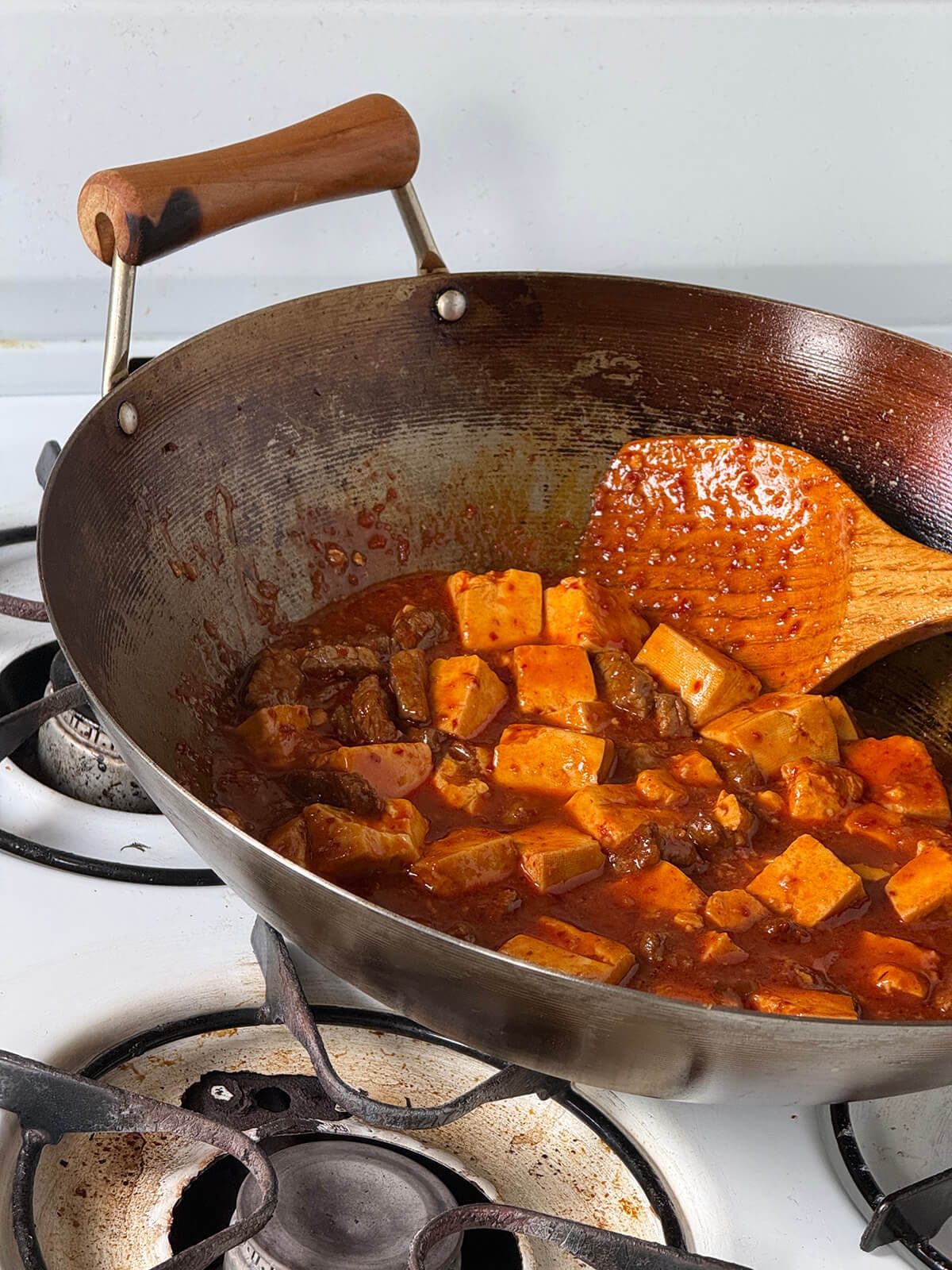
Familiar Chinese classics transformed by Korean sensibilities and ingredients
Clara Lee and her husband Eddo Kim’s first cookbook, Korean Soups: Recipes for Soups and Stews That Nourish, Restore, and Delight, is out next week—preorder it here.
Four years ago, my husband and I opened our second restaurant in San Francisco, a takeout spot in Outer Sunset called Hotline, which we envisioned as a contemporary take on junghwa, Korean-Chinese food. Our dream was to share the food of our childhood. Sadly, we shuttered it four months later. It was a wacky time coming out of Covid, and I don’t think people were ready to embrace this style of cooking, which has a unique history in the Korean diaspora. Diners loved reminding us during service that they were expecting kimchi fried rice, sizzling slabs of galbi, fiery cauldrons of silken tofu stew, and gochujang-glazed Korean fried chicken. They were imagining sticky fingers, lots of napkins, and food the color of Flaming Hot Cheetos. Our menu drew on a different playbook entirely, and despite the longstanding fusion of Korean and Chinese cuisines, something about Hotline got lost in translation.