
Palestinian Chef Sami Tamimi on Losing Friends and Finding His Voice in the Wake of Genocide
Welcome to Buffet Magazine, an independently owned digital food magazine. Our Tuesday editions are where we feature great writing about food. Thursday is for recipes.
IN THIS ISSUE: Put garlic in the beans, and pass the puffie ’pon the left-hand side.
Appetizers
Grate Expectations
When I first made a habit of cooking dried beans, I took a maximalist approach to aromatics. In addition to the usual suspects—carrot, onion, celery, garlic—I’d huck a rogue’s gallery of flavorsome ingredients into my bean pot, everything from herbs and chiles to dried mushrooms and kombu. But as I’ve settled into my bean cooking middle age, my regimen has become significantly more restrained. I want to experience a bean’s unique natural broth, especially when I’m investing in heirloom legumes. My lineup now is more monkish. A thread of decent olive oil, enough to make a small pool on top of the water; I find the grassy bitterness a nice counterpoint to the sweetness of the beans. A small peeled onion, left whole, to be fished out after cooking. Two or three bay leaves—I usually buy a bunch of fresh ones when I can find them and stash them in the freezer—for a piney lift. Throw in a three-finger pinch of kosher salt, and a few hours later I’ve got beans fit for a king.
A recent innovation has put some pep in my step, however, and seemed worth sharing now that Labor Day is in the rearview mirror and Bean Season is upon us. (I’ve been cooking them all summer, but I understand that not all share my enthusiasm—to my fellow travelers, I love you, I see you.) I gave up on adding garlic a while ago; I started to feel like it gave a certain implacable flabbiness to the pot after a long simmer. But a few weeks ago, after sampling the cooking liquor from a just-finished batch of borlotti beans, I felt moved to stir in a single finely grated clove of garlic. I let the beans cool on the stove, and when I tasted them again an hour or so later, I was astonished: the residual heat had sanded down the raw allium’s sharpness just enough, and the whole pot was now suffused with a delicate, prickly high note that made my lips smack and mouth water. I’m very much looking forward to carrying this method with me through the cold weather to come. If you try it, please let me know what you think. —Amiel
Fugu de Chow
A few times a year, I’m lucky to receive the newsletter of the Culinary Historians of Southern California. It arrives folded and taped shut, colorful gRapHiC DeSIgN peeking out between blurbs about gastronomic minutiae or CHSC business. It is not a sleek product in any way: it instead trades on the curious blend of expert knowledge and amateur enthusiasm that powered many newsletters of old, beckoning readers into a Circean world of culinary arcana rarely found outside academic journals or the recesses of Wikipedia. In the most recent issue, a guest entry by Australia’s national science agency CSIRO is dedicated to “Party Animals: Wildlife that Get Drunk or High on Food.” The story cites a 2014 BBC documentary in which a pod of dolphins were caught taking turns “gently chewing” on a puffer fish in order to release a non-lethal, extra-dank dose of its famed poison before puff-puff-passing it to the next bottlenose. According to CSIRO, the puffer fish escaped mostly due to the dolphins’ being absolutely chicken-fried steak off that tetrodotoxin. If any CraBs out there have a connect… —Alex

Palestinian Chef Sami Tamimi on Losing Friends and Finding His Voice in the Wake of Genocide
A Buffet exclusive
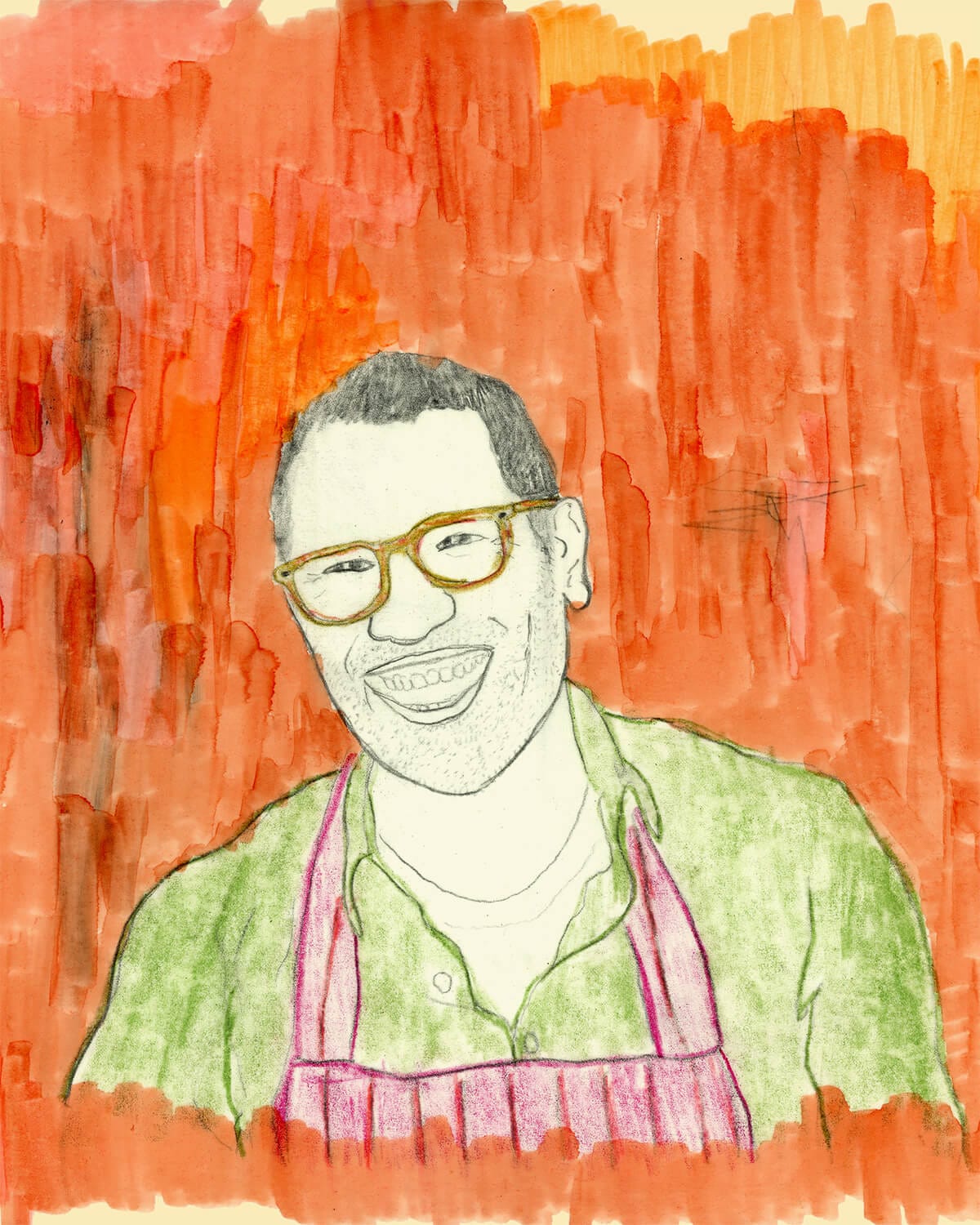
Sami Tamimi was content, for a while, with sticking to food.
The Palestinian chef made his name in the early 2000s alongside the Israeli chef Yotam Ottolenghi, as the Jerusalem-born duo opened a slate of influential London restaurants and cafes serving vegetable-centric dishes that drew deeply from the spices and flavors of the chefs’ shared hometown. It’s no exaggeration to say their cookbooks Ottolenghi and Jerusalem introduced the world to contemporary Palestinian and Israeli cooking, much like Claudia Roden’s A Book of Middle Eastern Food did for the classics in 1968. For a sizable stretch of his life, Tamimi was happy to focus on cooking good food that straddled pan-European chill and Jerusalemite warmth: chickpeas and spinach with honeyed sweet potato, chermoula eggplant with bulghur and yogurt.
But culinary stardom was exhausting. Restaurants, too. Covid didn’t help his anxiety, and Tamimi increasingly wanted to speak out about the apartheid state in Palestine. He had, in his words, “kind of a meltdown” and excused himself from the restaurant business in 2020. In Falastin, a Palestinian cookbook published that spring without Ottolenghi as a co-author, he began to speak frankly about the Israeli occupation and life in Palestine and Israel, inside and outside the kitchen.
Then came October 7th. Whatever remained of Tamimi’s reluctance to speak has vanished. In news media appearances and social media posts, he has demanded an end to both the Israeli genocide and U.S. and U.K. support for the Israeli military.